A worldwide community photographing and learning about wildlife

Project Noah Nature School

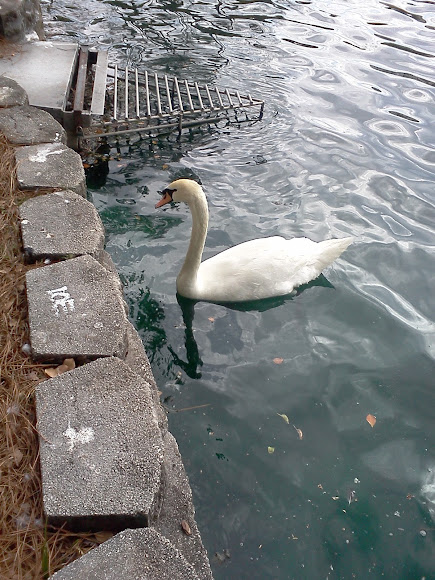
Swans, genus Cygnus
Swans, genus Cygnus, are birds of the family Anatidae, which also includes geese and ducks. Swans are grouped with the closely related geese in the subfamily Anserinae where they form the tribe Cygnini. Sometimes, they are considered a distinct subfamily, Cygninae. There are six to seven species of swan in the genus Cygnus; in addition there is another species known as the Coscoroba Swan, although this species is no longer considered related to the true swans. Swans usually mate for life, though 'divorce' does sometimes occur, particularly following nesting failure. The number of eggs in each clutch ranges from three to eight.
Swans feed in the water and on land. They are almost entirely herbivorous, although they may eat small amounts of aquatic animals. In the water food is obtained by up-ending or dabbling, and their diet is composed of the roots, tubers, stems and leaves of aquatic and submerged plants.
The legs of swans are normally a dark blackish grey colour, except for the two South American species, which have pink legs. Bill colour varies: the four subarctic species have black bills with varying amounts of yellow, and all the others are patterned red and black. Although most birds generally do not have teeth, swans are known to be an exception to this, having small jagged 'teeth' as part of their beaks used for catching and eating fish. The Mute Swan and Black-necked Swan have a lump at the base of the bill on the upper mandible.










No Comments